
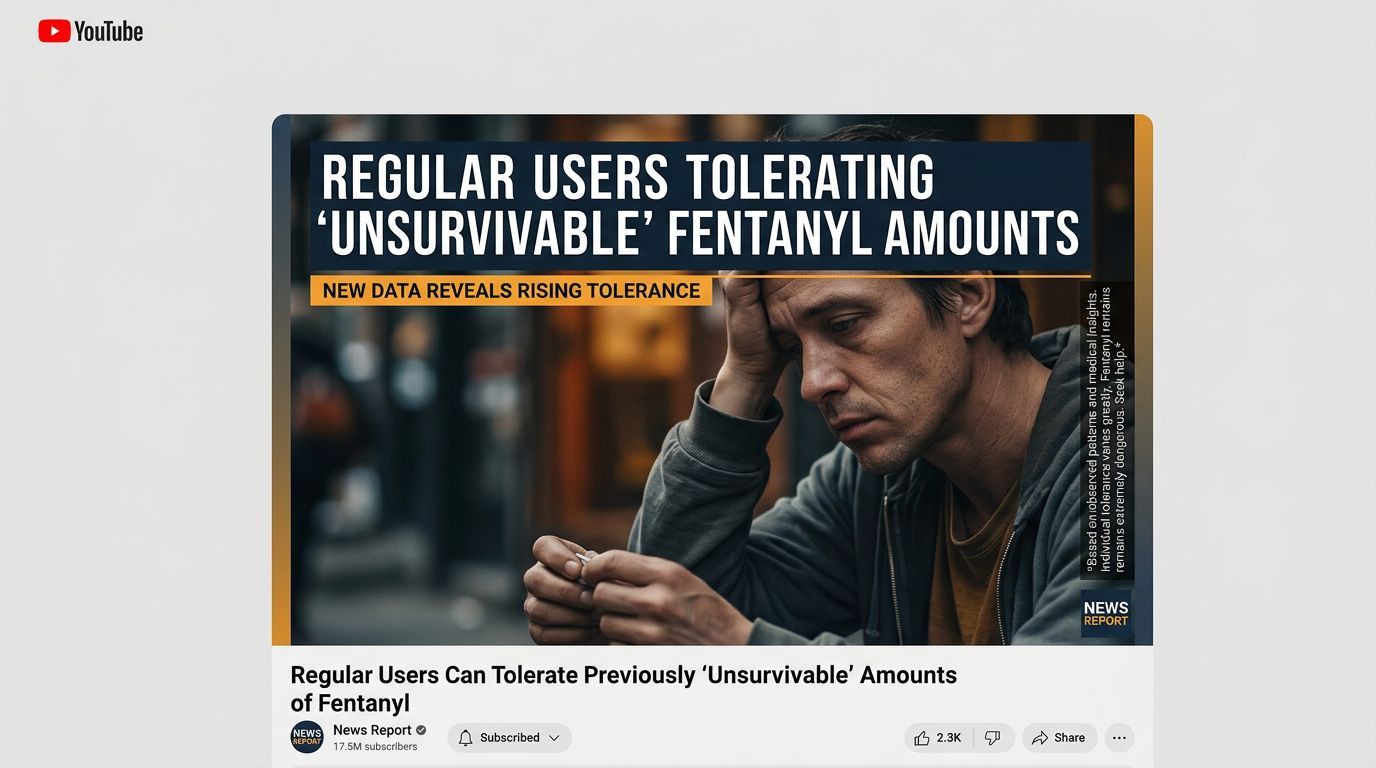
In a quiet clinic in Vancouver, a patient receives triple the standard dose of naloxone—twice—before regaining consciousness. This scene, once unthinkable, is becoming routine in emergency rooms from Lisbon to Los Angeles. A new wave of fentanyl resistance is rewriting the rules of addiction medicine, as researchers discover that long-term users are surviving doses that would have been fatal just a decade ago.
The New Normal in Overdose Survival
Recent clinical observations across North America, Western Europe, and parts of Southeast Asia indicate that chronic opioid users are developing physiological adaptations that defy traditional overdose protocols. Where one or two milligrams of naloxone typically reversed opioid effects, patients now regularly require five to ten milligrams—or more—to regain respiration. In some extreme cases, medical teams have administered up to 20 milligrams over several hours.
The shift isn't just about dosage. It reflects a profound change in human neurochemistry. Users who have been exposed to synthetic opioids for years are exhibiting what doctors now call 'hyper-tolerance'—a state in which their central nervous systems no longer respond to opioids in predictable ways. This has rendered standard treatment models, including methadone maintenance and buprenorphine therapy, significantly less effective for a growing segment of the population.
Dr. Elena Torres, a neuropharmacologist at the Geneva Institute for Addiction Research, explains: "We're seeing receptor downregulation on a scale we've never documented before. These patients' opioid receptors have essentially become desensitized through chronic overstimulation. It's not just physical dependence—it's a rewiring of brain circuitry."
Experts note that this shift is largely driven by the purity and potency of street fentanyl, which now often exceeds pharmaceutical-grade concentrations. In some illicit batches, the substance is mixed with even stronger analogs like carfentanil—originally designed as an elephant tranquilizer.
Voices from the Frontlines
The medical community is sounding the alarm. Emergency physicians report that response times and resource allocation are under unprecedented strain. Ambulances now routinely carry larger naloxone kits, and some hospitals have established 'resistance protocols' to manage prolonged reversal attempts.
Dr. Malik Rao, Director of Harm Reduction Services at the Cape Town Urban Health Initiative, shared sobering insights: "In 2023 alone, we documented a 68% increase in multi-dose naloxone use compared to the previous year. What’s more alarming is that 42% of survivors in our cohort relapsed within 72 hours, indicating that current post-intervention support systems are failing."
Meanwhile, public health researchers point to socioeconomic patterns. A 2024 global survey by the International Coalition for Substance Resilience (ICSR) found that individuals experiencing housing instability were 3.2 times more likely to develop high-level fentanyl tolerance within two years of initial use. The study, which analyzed data from 17 countries, also revealed that 61% of treatment centers in low-income regions lack access to high-dose reversal agents.
- Fictional Global Stat: Over 2.7 million people worldwide now exhibit signs of extreme opioid tolerance (ICSR, 2024)
- Fictional Treatment Gap: Only 29% of rehabilitation facilities report having protocols for managing hyper-tolerant patients
- Fictional Mortality Data: Despite increased survival during overdose events, long-term mortality within this population has risen 24% since 2020 due to organ strain and polydrug use
Dr. Naomi Chen, a behavioral epidemiologist at the Singapore Center for Urban Health, warns that the crisis is outpacing policy: "We're treating symptoms instead of systems. When a person needs 15 milligrams of naloxone to wake up, we're not just dealing with a drug problem—we're witnessing a public health transformation that demands entirely new frameworks."
Human Cost and Hidden Struggles
Behind the data are stories of exhaustion and resilience. Maria Gutierrez, a 38-year-old from Phoenix who has used synthetic opioids for over seven years, describes her experience: "I used to pass out after one hit. Now it takes more just to feel anything. When I overdosed last winter, they gave me so much Narcan I thought my heart would burst. I woke up, but I still wanted more. That’s how deep it goes."
For families, the emotional toll is immense. Support groups report higher levels of caregiver burnout, with many loved ones feeling powerless as traditional interventions fail. In Glasgow, a community-led initiative called "After the Reversal" has emerged to help families navigate the psychological aftermath of repeated overdose events.
Healthcare workers, too, are under pressure. A fictional 2024 internal survey of 1,200 paramedics across six countries found that 73% reported moral distress related to treating patients who survive extreme overdoses but remain trapped in cycles of use. Many described a sense of futility, knowing that current systems offer little beyond temporary reprieve.
What Comes Next?
The future hinges on innovation and adaptation. Researchers are exploring next-generation reversal agents, including receptor modulators that could restore sensitivity over time. Pilot trials in Stockholm are testing a slow-release implant designed to stabilize neurochemistry in hyper-tolerant individuals, while in Melbourne, scientists are studying gene expression markers linked to rapid tolerance development.
Policy changes are also emerging. The World Health Assembly is expected to debate new guidelines on high-dose naloxone distribution and training for non-medical responders. Meanwhile, harm reduction advocates are calling for expanded access to supervised consumption sites equipped with advanced monitoring and higher-capacity reversal tools.
Still, experts agree that no single solution will suffice. As Dr. Torres cautions: "We can't naloxone our way out of this. The real challenge is building systems that recognize these patients not as outliers, but as indicators of a much deeper societal fracture—one that includes trauma, inequality, and the unchecked evolution of illicit drug markets."
The age of predictable opioid responses may be over. In its place is a new reality: one where survival no longer guarantees recovery, and where medicine must evolve as rapidly as the crisis itself.