
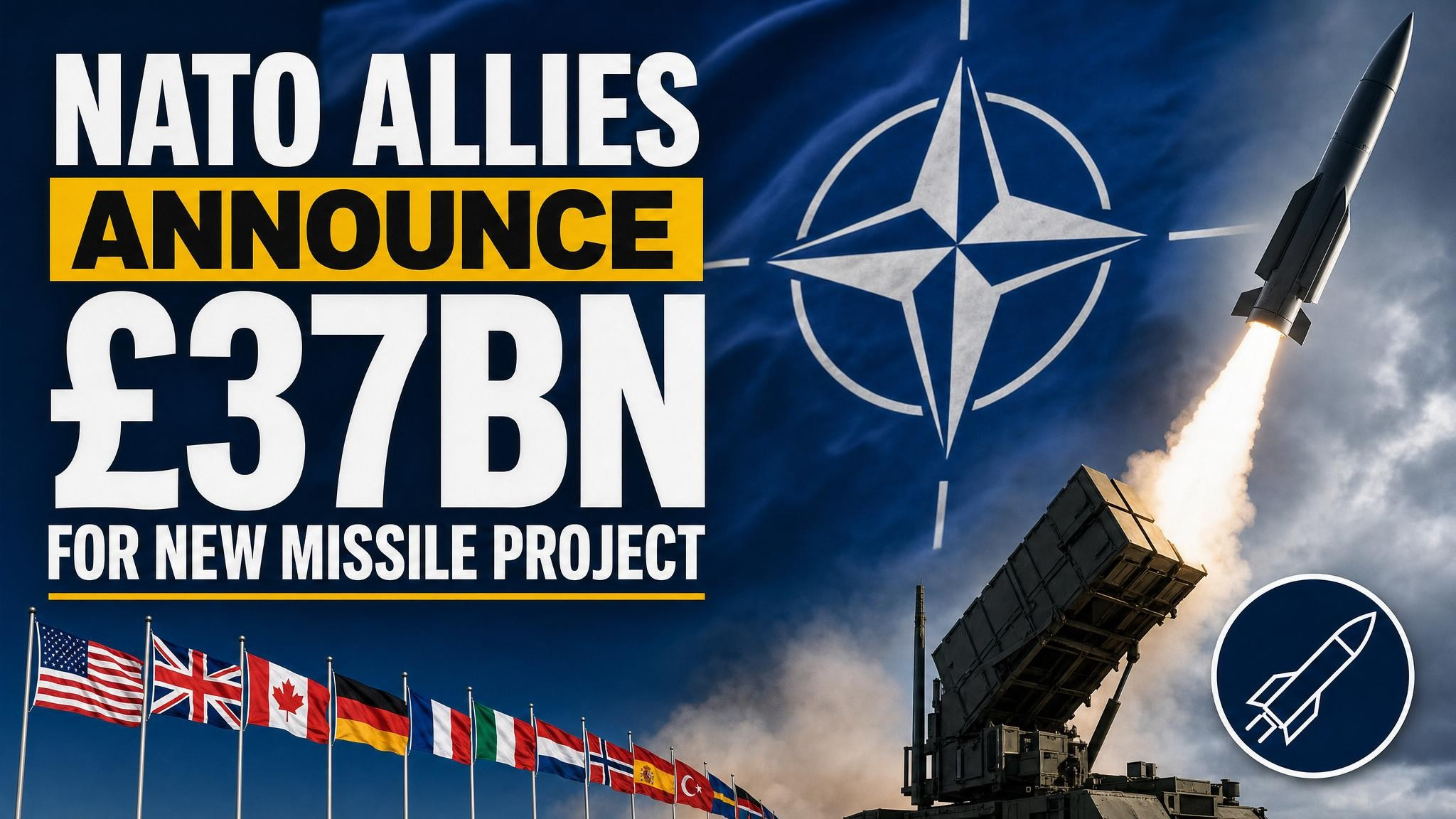
NATO Allies Commit Record Funds to Missile Defense Initiative
In a significant show of unity and strategic foresight, leaders from across the North Atlantic Treaty Organization (NATO) have announced a groundbreaking joint investment of approximately £37 billion (roughly $47 billion USD) towards a comprehensive new missile defense program. This landmark initiative, revealed following intensive deliberations, aims to bolster the alliance's capabilities against a spectrum of evolving aerial and ballistic threats.
The announcement marks a pivotal moment for NATO, signaling a renewed commitment to collective security in an increasingly complex geopolitical landscape. The substantial funding will be allocated over the next decade to research, develop, and deploy advanced missile defense systems designed to protect member states from a wide range of threats, from short-range tactical missiles to long-range intercontinental ballistic missiles.
Project Details and Strategic Objectives
While specific details of the technological components remain classified, sources close to the project indicate a multi-layered approach. This will likely involve integrating and enhancing existing national capabilities with cutting-edge new technologies, potentially including advanced radar systems, sophisticated interceptor missiles, and robust command and control networks. The program's primary objective is to create a more unified and effective shield, capable of detecting, tracking, and neutralizing missile threats before they reach their targets.
Dr. Anya Sharma, a senior defense analyst at the Global Security Institute, commented on the significance of the investment: "This £37 billion commitment is not merely a financial figure; it represents a profound strategic realignment. In recent years, we've seen a discernible increase in missile proliferation and the sophistication of offensive capabilities from various state and non-state actors. NATO's decision to pool resources and expertise on this scale demonstrates a clear understanding that missile defense is no longer a niche capability but a cornerstone of deterrence and collective security."
Sharma elaborated, stating, "The integration aspect is crucial. By creating a more seamless network, nations can share real-time threat data and coordinate responses far more effectively than ever before. This interoperability is key to ensuring that any missile threat, regardless of its origin, is met with a swift and decisive allied response."
Economic Impact and Industrial Collaboration
The financial commitment is expected to stimulate significant economic activity across the alliance's defense industries. Contracts for research, development, manufacturing, and maintenance are anticipated to create thousands of high-skilled jobs and foster innovation in advanced technologies. Preliminary economic modeling suggests that for every £1 billion invested, approximately 10,000 direct and indirect jobs could be generated within the participating nations' defense sectors.
A spokesperson for a leading European aerospace consortium, speaking on condition of anonymity, highlighted the industrial implications: "This is a game-changer for the European defense industrial base. It provides the long-term certainty needed to invest in R&D and manufacturing infrastructure. We anticipate significant cross-border collaboration, fostering a more competitive and capable European defense ecosystem."
Addressing Evolving Threats
The decision comes at a time when international security challenges are becoming increasingly complex. The rise of new missile technologies, including hypersonic weapons, and the demonstrated use of ballistic missiles in regional conflicts, have heightened concerns among NATO members. According to a recently declassified NATO intelligence report, the number of countries possessing ballistic missile capabilities has increased by nearly 15% in the last five years, while the development of hypersonic glide vehicles has accelerated globally.
"The threat landscape is changing at an unprecedented pace," stated General Markus Weber, a retired NATO strategist. "We are no longer just preparing for Cold War-era missile threats. Hypersonic missiles, for instance, travel at speeds exceeding Mach 5 and possess maneuverability that challenges current detection and interception methods. This new program is essential to staying ahead of the curve and ensuring that our citizens remain protected."
General Weber further emphasized, "The current generation of missile defense systems, while effective against certain threats, needs significant upgrades to contend with these emerging capabilities. This investment signifies NATO's commitment to maintaining a technological edge and ensuring credible deterrence."
Political Ramifications and Allied Cooperation
The announcement was made following high-level discussions, including a summit convened by Prime Minister Sir Keir Starmer, which brought together roughly a dozen allied leaders in Ankara. The meeting underscored the political will and consensus required to undertake such a large-scale collaborative project. This level of coordinated investment demonstrates a strong reaffirmation of NATO's core principle of collective defense.
Political analysts suggest that this unified approach will send a clear message to potential adversaries about the alliance's resolve. It also strengthens the bonds between member states, fostering deeper cooperation on security matters. "The ability to agree on and fund such a massive, long-term project speaks volumes about the current state of transatlantic security cooperation," noted Dr. Eleanor Vance, a professor of international relations at Georgetown University. "It shows that despite differing national priorities, the fundamental commitment to mutual defense remains exceptionally strong."
The program is expected to be implemented in phases, with initial development and testing commencing within the next 18 months. Full operational capability is projected to be achieved within the next seven to ten years, subject to technological advancements and ongoing threat assessments. This ambitious undertaking represents a significant leap forward in NATO's ongoing efforts to ensure the security and stability of the Euro-Atlantic area.