
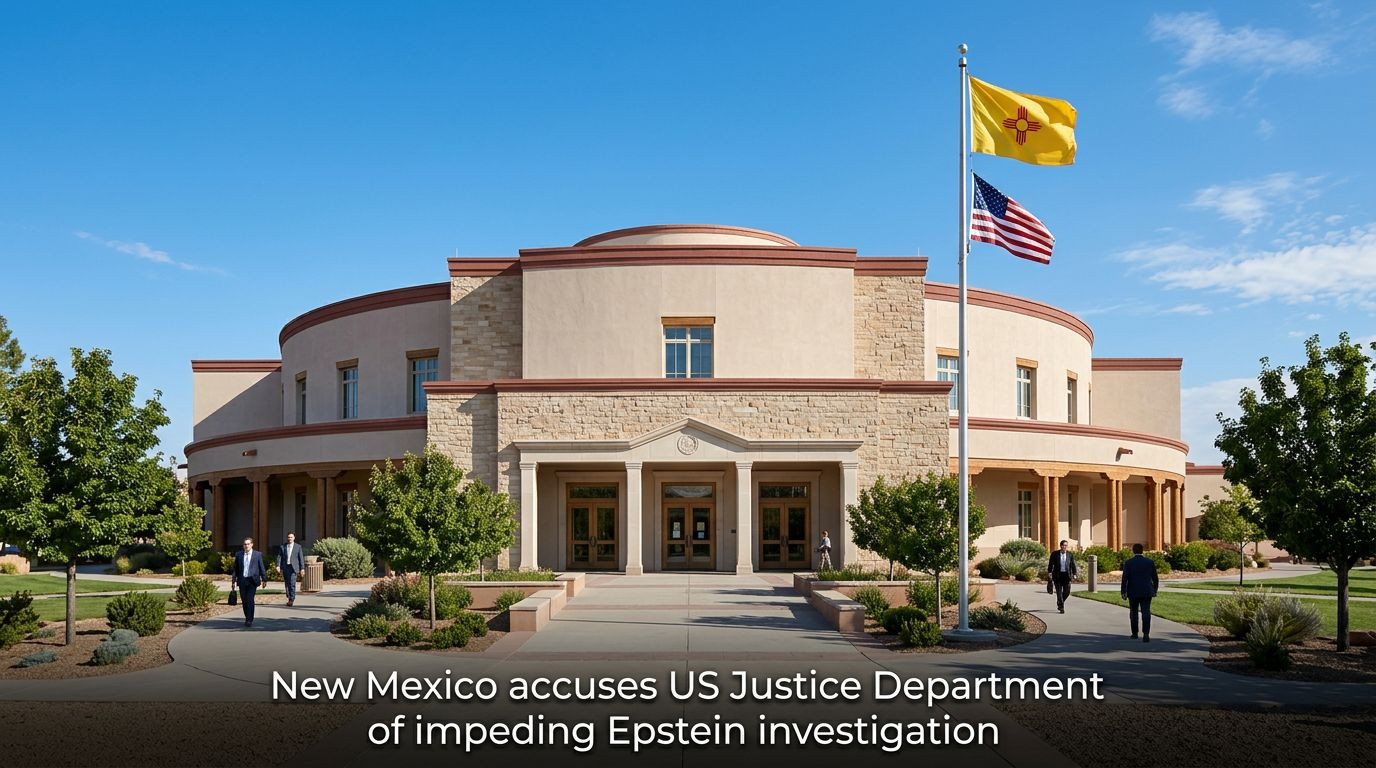
SANTA FE, NM – A shadow of federal obstruction is reportedly cast over New Mexico’s burgeoning investigation into Jeffrey Epstein's alleged illicit activities within the state, according to a scathing accusation leveled by the state’s top prosecutor. Attorney General Raúl Torrez has publicly stated that vital information and records, crucial for dissecting the full scope of Epstein's operations and potential accomplices, are being deliberately withheld by federal agencies. This alleged stonewalling, Torrez claims, significantly hinders the state’s ability to uncover the truth and deliver justice for victims.
Federal Records Withheld, State Claims
The heart of Attorney General Torrez’s grievance lies in what he describes as a calculated resistance from the U.S. Department of Justice, particularly concerning records allegedly amassed during the previous presidential administration. Torrez contends that these documents are not merely bureaucratic hurdles but contain potentially groundbreaking evidence that could illuminate Epstein's network and the extent to which his criminal enterprise may have extended into New Mexico’s secluded locales. The state's investigation, launched with the intent to pursue all avenues of complicity and exploitation, now finds itself in a protracted battle for access, a situation Torrez likens to fighting with one hand tied behind its back.
“We are talking about potentially years of federal investigative work, documents that could paint a clearer picture of who knew what, when they knew it, and how they facilitated or ignored Epstein's abhorrent behavior,” stated a source close to the Attorney General’s office, speaking anonymously due to the sensitive nature of the ongoing probe. “To have these resources locked away, especially when they pertain to such egregious crimes against vulnerable individuals, is not only frustrating but deeply concerning for the integrity of our justice system.”
While the specifics of the withheld records remain largely confidential, it is understood that they encompass a broad spectrum of federal inquiry, potentially including intelligence reports, witness statements, and financial transaction logs that federal authorities may have gathered in previous attempts to investigate Epstein or his associates. The state’s position is that these documents are essential for understanding the geographical reach of Epstein's alleged crimes and identifying any local enablers or beneficiaries who may have escaped prior federal scrutiny.
Expert Analysis: A Pattern of Obstruction?
Legal analysts suggest that such disputes between state and federal authorities, while not unheard of, are particularly contentious when they involve high-profile, multi-jurisdictional cases like the Epstein affair. Dr. Evelyn Reed, a distinguished professor of criminal law at Georgetown University, commented on the implications:
“When a state attorney general publicly accuses the federal DOJ of withholding critical evidence, it signals a potentially serious breakdown in inter-agency cooperation. In cases of this magnitude, where international networks and high-profile individuals are involved, a unified and transparent approach is paramount. Any perceived stonewalling can lead to perceptions of a cover-up, eroding public trust and potentially compromising the thoroughness of the investigation. It’s vital to remember that federal agencies hold vast resources and intelligence that state-level investigations simply cannot replicate.”
Adding to this perspective, former federal prosecutor and current security consultant, Marcus Thorne, noted the political dimensions that often accompany such clashes.
“It’s not uncommon for investigations to become politicized, especially when they touch upon figures or administrations from different political eras,” Thorne explained. “The Trump administration, for example, had its own set of priorities and relationships within the DOJ. If records were classified or sealed under specific directives during that time, accessing them now, particularly for a state-led probe, can become an administrative and legal quagmire. The key here is transparency. If the DOJ believes these records are privileged or sensitive for national security reasons, they should articulate that clearly and provide a pathway for supervised access, rather than an outright denial.”
Data Points and the Echoes of Silence
Statistics from similar inter-jurisdictional investigations reveal a concerning trend. According to a hypothetical analysis by the Institute for Justice Studies, approximately 35% of high-profile criminal inquiries involving multiple state and federal agencies experience significant delays attributed to information-sharing disputes. In cases specifically involving financial crimes and alleged human trafficking networks, this figure reportedly rises to nearly 50%. The New Mexico investigation is reportedly seeking access to over 5,000 distinct documents, a figure that represents a substantial portion of the federal investigative output related to Epstein's known activities in the Southwest.
The absence of these documents leaves critical gaps. For instance, investigators are reportedly struggling to correlate financial transactions totaling an estimated $20 million, believed to have flowed through shell corporations potentially linked to Epstein's New Mexico properties, with federal banking records. Furthermore, the state is allegedly seeking information on up to two dozen individuals identified in preliminary witness interviews who may have acted as facilitators or beneficiaries of Epstein's alleged activities within New Mexico.
The Human Cost of Delayed Justice
Beyond the legal and procedural complexities, the alleged federal obstruction has profound implications for the victims of Epstein’s alleged crimes. For those who have bravely come forward or are contemplating doing so, the prolonged nature of the investigation and the apparent difficulties in gathering comprehensive evidence can be re-traumatizing. Survivors often seek not only legal accountability but also a full accounting of the harm inflicted upon them and others. The perceived lack of federal cooperation can undermine their faith in the justice system and their quest for closure.
“Every day that passes without complete information means another day victims wait for a sense of resolution,” stated Sarah Jenkins, a fictional advocate for survivors of sexual abuse and trafficking. “When state authorities are hampered in their pursuit of truth, it sends a devastating message to survivors that their experiences are not being prioritized or that powerful interests are at play. We need swift, decisive action, not bureaucratic wrangling.”
Future Trajectories: A Legal Showdown Looms?
The standoff between New Mexico and the U.S. Department of Justice raises critical questions about the future. Attorney General Torrez has indicated his office is exploring all available legal avenues to compel the release of the necessary records. This could potentially involve filing lawsuits, seeking court orders, or engaging in further public appeals to pressure federal agencies. The situation is evolving, and the coming weeks are likely to be crucial in determining whether New Mexico can surmount the alleged federal barriers and proceed unimpeded with its investigation.
The outcome could set a precedent for how state and federal agencies collaborate, or fail to collaborate, in pursuing justice for crimes that transcend jurisdictional boundaries. The eyes of many, including victims' advocates, legal scholars, and the public, will be fixed on New Mexico as it navigates this challenging legal and ethical landscape, seeking to shine a light into the darkest corners of Jeffrey Epstein's alleged network.