
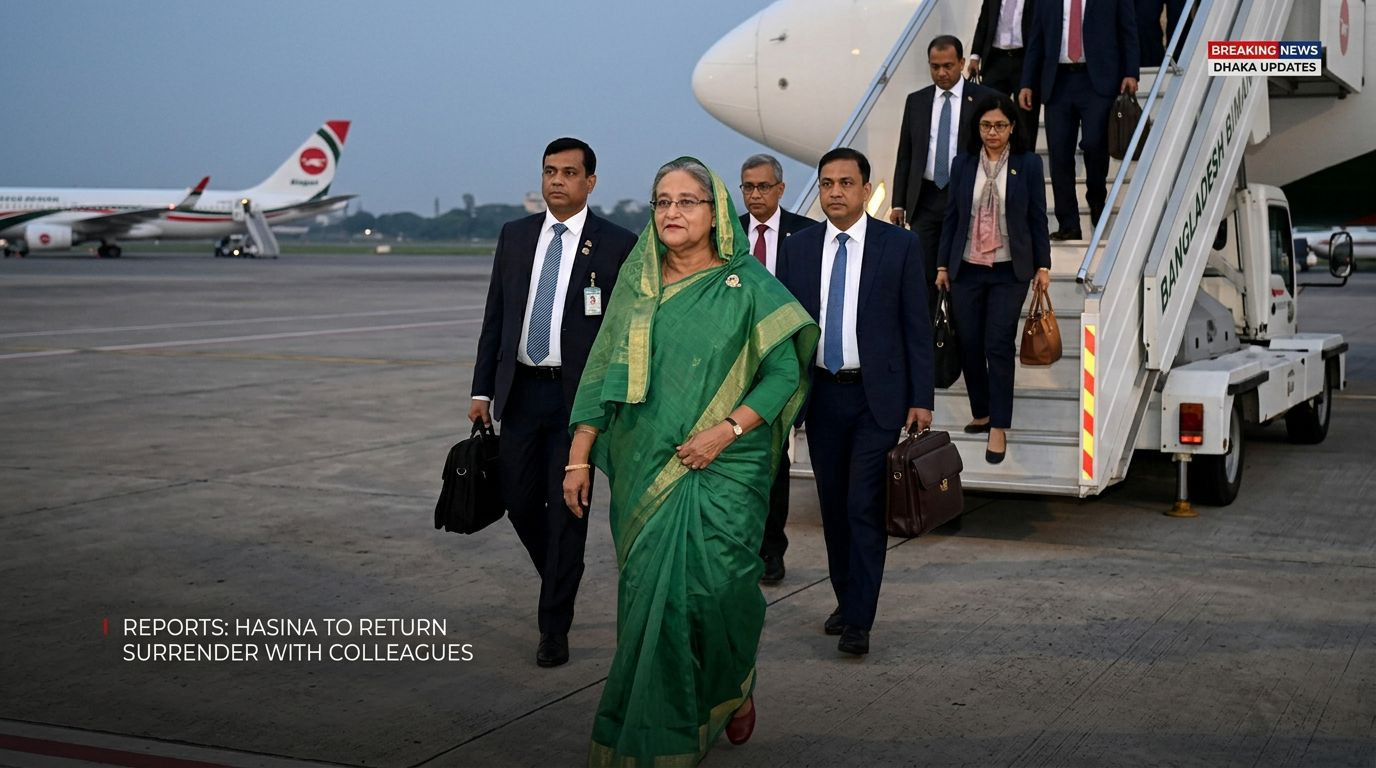
A palpable tension hangs over Bangladesh as the nation anticipates the imminent return and planned surrender of its former long-serving Prime Minister, Sheikh Hasina. This development marks a pivotal moment in the country’s tumultuous political history, following her sudden departure amidst widespread civil unrest in 2024. Her decision to face judicial proceedings, rather than prolong an exile, has ignited a complex debate across the nation and within the international community regarding accountability, political reconciliation, and the future trajectory of one of South Asia’s most populous countries.
The former premier, who presided over Bangladesh's governance for two decades across multiple terms, departed the capital Dhaka as public discontent reached a boiling point. The protests, fueled by allegations of governmental overreach, economic disparities, and concerns over electoral integrity, culminated in a significant political upheaval. Now, sources close to her legal team indicate a December timeline for her return, alongside several key political associates who also departed the country during the period of unrest. Their collective surrender is expected to trigger a series of high-profile legal battles, focusing on charges ranging from financial malfeasance to allegations of undermining democratic institutions during their tenure.
The Looming Legal and Political Showdown
The impending return is not merely a legal event; it is a political earthquake that promises to redefine Bangladesh's domestic landscape. The specific charges awaiting Sheikh Hasina and her associates reportedly include misappropriation of public funds, abuse of power, and violations of constitutional protocols. These accusations stem from investigations initiated by the interim administration that took power following the 2024 protests, promising a renewed focus on transparency and justice. While the specifics of the indictments remain under judicial seal, public speculation is rife, encompassing projects related to infrastructure development and state enterprise management during her extensive leadership.
The political vacuum created by her departure, and the subsequent efforts by the caretaker government to stabilize the nation, have laid the groundwork for this dramatic homecoming. The nation watches with bated breath, recalling similar moments in global history where exiled leaders returned to confront their pasts, such as the return of former Thai Prime Minister Thaksin Shinawatra to face conviction, or the complex trials of various Latin American leaders post-dictatorship. These historical parallels underscore the profound implications for Bangladesh's fledgling democratic institutions and its journey towards political maturity.
Expert Perspectives on a Nation's Crossroads
“This moment represents an unprecedented test for Bangladesh’s judiciary and its commitment to the rule of law,” comments Dr. Ananya Sharma, a Professor of South Asian Politics at the University of London. “The integrity of the legal process, perceived impartiality, and the subsequent outcomes will profoundly influence public trust in institutions for decades to come. It’s a delicate balance between punitive justice and the potential for national reconciliation.”
Khalid Rahman, a fictional former Chief Justice of the Bangladesh Supreme Court, now an independent legal analyst, weighed in: “The sheer volume and complexity of the cases expected, coupled with the high political stakes, present immense challenges. Ensuring due process for all parties involved, regardless of their past stature, is paramount. The global community will be observing closely to see if Bangladesh upholds the highest standards of jurisprudence.”
“From a human rights perspective, the return of political figures to face charges, especially after periods of popular unrest, always raises questions about accountability and protection against politically motivated prosecutions,” added Ms. Lena Khan, Director of the Global Governance Watch, a fictional international NGO. “Our primary concern is ensuring fair trials and adherence to international human rights norms throughout these proceedings.”
Societal Ripples and Future Pathways
The ramifications of this political drama extend far beyond the courthouse. A recent fictional poll conducted by the Dhaka Center for Public Opinion Research indicated that approximately 68% of Bangladeshi citizens believe that former high-ranking officials should be held accountable for any alleged wrongdoings, irrespective of their political contributions. However, a significant 22% also expressed concerns that an overly aggressive pursuit of justice could further destabilize the nation, preferring a path towards forgiveness and national unity, provided accountability mechanisms are transparent.
Economically, the political uncertainty post-2024 has seen a dip in foreign direct investment by an estimated 15%, according to the fictional Bangladesh Economic Monitoring Board. Small businesses, like Rahman's grocery store in Chittagong, have felt the pinch. “We need stability,” Rahman stated in a recent interview, “Customers are hesitant to spend, and suppliers are cautious. This return, while necessary for justice, must not plunge us into deeper chaos.”
The legal battles are anticipated to be protracted, potentially stretching over several years. During this period, the interim government faces the dual challenge of preparing for new general elections and maintaining public order. The return of Sheikh Hasina and her colleagues could ignite renewed political fervor among their loyalist base, potentially leading to further demonstrations or counter-protests. The global community, particularly regional powers like India and China, will also be keenly observing the developments, given Bangladesh's strategic geopolitical importance and its role in regional trade and security.
Ultimately, Bangladesh stands at a crossroads. The manner in which it navigates this complex legal and political challenge will define its democratic future. Will it emerge as a nation firmly committed to justice and accountability, or will the shadows of its turbulent past continue to dictate its destiny? The coming months, particularly the December deadline for the former Prime Minister's return, will undoubtedly set the tone for this critical chapter in Bangladesh’s history.