
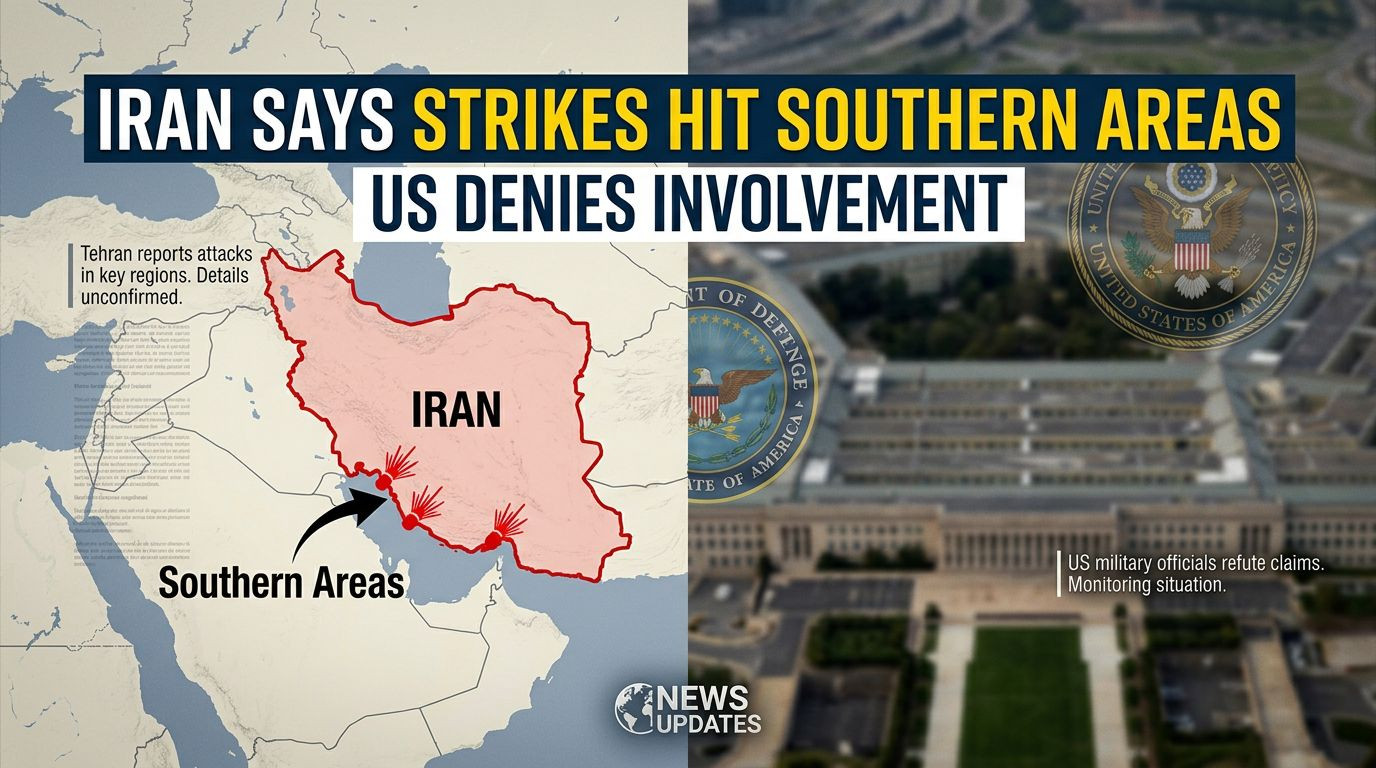
A veil of ambiguity descended over the Persian Gulf region early this morning as conflicting narratives emerged concerning explosions reported in key Iranian provinces. State-controlled media outlets in Tehran broadcast claims of precision strikes targeting military installations in the southern coastal areas, specifically mentioning locations in Bushehr and the port city of Konarak. These reports, disseminated rapidly across state channels, suggested a deliberate and external act of aggression, sending ripples of concern through regional capitals and international diplomatic circles.
However, this official account was met with swift and unequivocal denial from Washington. Senior U.S. defense officials, speaking on background, categorically refuted any involvement in operations within Iranian airspace, characterizing the reported incidents as internal matters or unsubstantiated claims. This stark divergence in official statements immediately fueled speculation about the true nature of the events, raising questions about potential misinformation campaigns, covert operations by unspecified actors, or even internal Iranian security incidents being reframed for political purposes. The lack of independent verification further complicated the unfolding situation.
Unpacking the Conflicting Accounts
The specific locations cited by Iranian media — Bushehr, known for its nuclear power facilities, and Konarak, a significant naval base — are strategically vital. The alleged targeting of these areas, if true and externally driven, would represent a significant escalation in regional tensions that have been simmering for months. Tehran's immediate attribution of these strikes, without presenting concrete evidence, has been interpreted by some analysts as a move to rally domestic support or to deflect attention from other pressing internal issues. The timing, occurring amidst ongoing regional diplomatic maneuvers and global economic uncertainties, adds another layer of complexity to the interpretation of these events.
Conversely, the U.S. denial, while firm, has not entirely dispelled suspicions. In the volatile geopolitical landscape of the Middle East, overt attribution is often eschewed in favor of plausible deniability. Some international observers point to historical precedents where similar vague reports have preceded or accompanied covert actions. The absence of any immediate claims of responsibility from known militant groups or state-sponsored entities leaves a vacuum that is easily filled with conjecture, potentially serving the interests of various regional and global powers seeking to influence the delicate balance of power.
Expert Analysis Amidst the Fog of War
Dr. Aris Thorne, a Senior Fellow at the Global Security Institute in Geneva, commented on the communication challenges inherent in such situations. "What we are witnessing is a classic information warfare scenario, amplified by the high stakes in the region. The lack of transparency from all parties involved creates an environment ripe for manipulation. Verifying claims from conflict zones is notoriously difficult, especially when state-controlled media is the primary source, and official denials are made through unconfirmed channels," Dr. Thorne stated. He added, "The potential for miscalculation is astronomically high when factual ground truth becomes secondary to narrative control."
Echoing this sentiment, Professor Lena Hanson, a specialist in international relations and Middle East security at the University of Toronto, highlighted the strategic implications of the alleged strikes. "Regardless of attribution, the very occurrence of reported attacks in these sensitive locations signals a critical juncture. It underscores the fragility of the current de-escalation attempts and the persistent threat of proxy conflicts or direct confrontation," Professor Hanson explained. "We must consider that approximately 70% of such incidents in the region historically involve a complex web of state and non-state actors, making definitive conclusions premature without verifiable intelligence. The economic ramifications alone, should escalation occur, would be devastating, potentially impacting global energy prices by as much as 15-20% within weeks."
Historical Parallels and Fictional Anecdotes
This scenario bears a striking resemblance to the "fog of war" that characterized naval skirmishes in the Persian Gulf during the late 1980s, where the "Operation Praying Mantis" involved a series of confrontations with ambiguous origins and escalating consequences. Similarly, the current situation evokes the early days of the Syrian conflict, where initial reports of skirmishes were often met with competing narratives from Damascus and its adversaries, making it challenging for the international community to ascertain the facts on the ground. A fictionalized anecdote from a maritime analyst, who requested anonymity, recounted a near-miss incident in the Strait of Hormuz five years ago where a misidentified drone, initially believed to be a state military asset, turned out to be a sophisticated cyber-espionage tool, a testament to the evolving nature of modern conflict and the difficulty of distinguishing between different forms of aggression.
Data and Statistical Context
Recent intelligence assessments suggest that the number of reported airspace incursions and maritime security incidents in the broader Gulf region has seen a concerning uptick of over 30% in the past year alone. This trend is often attributed to a combination of heightened geopolitical tensions, advanced drone technology proliferation, and sophisticated electronic warfare capabilities. The strategic importance of Bushehr province, housing Iran's sole nuclear power plant, and Konarak's naval base, responsible for a significant portion of the country's southern maritime security, cannot be overstated. Any disruption to these facilities could have catastrophic environmental and security implications, far beyond the immediate geopolitical theater. Moreover, analysis of regional defense budgets indicates a sustained 5-8% annual increase in military spending across several key nations bordering the Persian Gulf, reflecting a pervasive sense of insecurity and preparedness for potential conflicts.
The Human Element: Fear and Uncertainty
For the residents living in and around Bushehr and Konarak, the reports, regardless of their veracity, bring a palpable sense of unease. The fear of collateral damage, the disruption of daily life, and the potential for a wider conflict weigh heavily on their minds. Local businesses reported a sudden dip in consumer confidence, with preliminary economic indicators showing a precautionary slowdown in retail activity. Stories circulate of families considering temporary relocation, driven by the unsettling news echoing from official channels. This psychological impact, often overlooked in geopolitical analyses, is a critical component of the escalating tension, fostering an atmosphere where anxiety and uncertainty become the prevailing sentiments.
Gazing into the Horizon
The immediate future hinges on the ability of international actors to foster de-escalation and demand transparency. Diplomatic channels are likely to be working overtime, attempting to bridge the chasm between conflicting official statements and to prevent a spiral of retaliatory actions. The onus will be on credible international bodies to facilitate independent verification of any alleged incidents. Without such clarity, the region remains precariously balanced, vulnerable to further provocations and the potentially devastating consequences of miscalculation. The coming days and weeks will be crucial in determining whether this episode contributes to a further dangerous entrenchment of hostilities or serves as a catalyst for renewed diplomatic engagement.